Showing posts with label Arizona. Show all posts

Thursday, March 28, 2013

Creativity Blog # 2, Arizona Photographer Paul Gill

 A few years ago when I stumbled across the photographs of Paul Gill, I was a bit overwhelmed.  I had the feeling like I had discovered a photographer with something of the same sensibility as what I had hoped to bring to my own best paintings.  A sense of design.  A sense of the extreme variations of color captured in the desert - if one knew the land well enough to have a sense of timing and urgency to find the land at its highest point of expression.  I actually felt like Paul saw the scenes that he photographed much like some of the best painters I knew.  It was clear that to him an image is more than a digital click - it has all the potential to be a piece of art.  Paul Gill, more than any other Arizona photographer I am aware of, makes photographs rise to the level of fine art.

He is also one of the very few photographers whom I have sought out for permission to paint from his images (A reminder to all artists, you should not be painting from other people's photographs without permission.  Paul and I made an arrangement by which I could paint from his images ).  A handful of some of my own best paintings of the desert, mostly in spring themes, have been highly stylized versions of Paul Gill images.

A short bio on his website says it best:

" A native of the Arizona desert, Paul’s photographs have appeared on the cover and pages of Arizona Highways magazine, calendars and books along with Natures Best magazine and many scenic publications, calendars and books as well as displayed in fine art galleries. Paul received his bachelors of fine arts from Arizona State University and had worked as a art director for 17 years. before turning all of his attention to photographing the grandeur of nature."
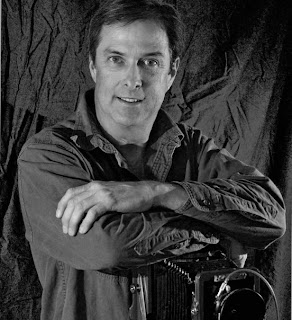


Paul Gill
Photographer


Official website:
http://paulgill.photoshelter.com

Below is the website for the book "Wild in Arizona" by Paul Gill and Colleen Miniuk-Sperry.   I HIGHLY recommend this book.  It is a great resource for everyone, whether you are interested in photography, or if you are a painter looking for amazing spring blooms! Click below:
http://www.wildinarizona.com/index.htm

Facebook:
https://www.facebook.com/paulgillphoto


Below are Paul's responses to my "creativity" questions...

 
1) What personal habits do you have that you feel make you more creative?

Previsualization is the key for me to take elements that I have seen from a location or subject matter and find a story of what it is I want to say about it. I then can create a image in my head making decisions about time of day and light direction to tell the story. Sometimes I will remember past images I have seen and will try and think of a ways to change the image to fit my vision. This is always a driving force to get me to a place where I want to create, funny thing is I almost never find that previsualised image but it do’s influence how and what I see.


2) Who are the creative artists, in any field, that inspire you the most?

I was originally inspired by Maxfield Parish and his great sense of light. My photography is inspired by the Father of near-far David Munch and Tucson's own Pulitzer prize photographer Jack Dykinga both of whom I have had the great honor to photograph with in my earlier years. 


3) What do you do when you are not feeling creative?  Or - how to you get yourself back to a point where you are feeling creative?

To be inspired I try and place myself into beautiful light locations and that triggers the creative spark but that's not always possible so to start creating I will make that first image this helps me get in touch with my surroundings and I will start seeing line shape and light, which leads to finding compositions that I can come back to when the optimal light is on them. If nothing is working I will stop trying to force it to happen then come back latter and take that first step by making an image. 


4) What are some creative outlets that you enjoy outside your own respective creative field? 

Music is always my catalyst with upbeat positive tunes to pump me up before a shoot and relaxing background sounds to slow me down so I can concentrate on what is in front of me giving me the ability to focus on one subject at a time and break down a scene to its most simple components. This helps me block out the world around me.


5) For someone who has talent in a creative field, how would you suggest they go about converting that talent into something original - something that stands out from the crowd?

We all have distinctive visions and directions to move our images but sometimes seeing other artists work can help direct our own originality by filtering out what we do and don't like. I found that the more time I spent with professionals the more I developed my own look and personality to my imagery. And it was only then that I was able to explore and experiment with the talent I have which looks nothing like the photographers that originally inspired me. 
For someone just starting out in the creative field and not sure about their direction I like the book: 

Steal Like an Artist: 10 Things Nobody Told You About Being Creative. Austin Kleon 

I wish this book was out when I was just starting out.


           (This image, "Ponderosa Bloom" is featured in the permanent collection of the Smithsonian)

 http://paulgill.photoshelter.com


 www.neilmyersart.com

Wednesday, July 11, 2012

Saguaros - and NO I Don't Get Tired of Painting Them!

Hello everyone - sorry I've been a little absent.  I tend not to blog like a madman.  I prefer to write something when I actually have something to say, rather than all to the reams of drivel and blabber floating around out there on the internet. 

This week I am working on a new 30 x 40 of Saguaros on a hillside of blooming brittle-brush.  This painting, and a legion of others that are sitting and drying in the studio gave me the idea for this blog post - some thoughts about one of our great Arizona icons, the Saguaro cactus. 

Since we are planning a saguaros show of my paintings at the Marshall-LeKAE Gallery in Scottsdale for March of 2013, I thought it might be nice to reflect a little on the giant cactus that has been so much the centerpiece of countless paintings by me - and other Arizona artists. 

I remember once talking to Max Mikesell, who formerly ran the Max Gallery in Tucson some years back, and I remember Max saying that it seemed to him that some artists who paint saguaros hadn't even looked at them.  Almost as if they had some general idea of what a saguaro should look like; two upturned arms, very "roadrunner and coyote" kind of landscape stereotype.  And he mentioned that even though my saguaro themed works weren't strictly realistic, they still showed evidence that I had taken some time to look at them...and indeed I have.

What is most important if you are an artist painting Saguaros is the realization that they provide on of the most prominent verticals in a landscape dominated by big skies, small, round trees, and huge horizons.  Saguaros cast your eyes up to the vertical, and thus balance a landscape much the way that a pine tree might well do back east in the woods.  But the cool thing about saguaros is their amazing shapes and individual character.  I've told people that they might well be one of the few plants that I think actually have personality.  You see them swell with the summer rains.  You see them hold up and hold firm when monsoon storms rip through the area.  And you see them lord over the landscape like giants - standing tall and proud even in the hottest, most brutal parts of Arizona summer.  I have called some among the series of saguaro paintings that I've done "Giants of the Desert", and it seems to me that they are indeed giants who stand over us in the fiery heat of our surroundings.  When you come to know them and the fact that they grow so slowly that they are frequently 50 to 75 years old before they even sprout a single arm - you then realize that in mature saguaro forests, you may be looking at 150 or 200 year old plants.  Plants whose duration dwarfs the lifetime of humans.  I remember a biologist saying that was one of the problems of long term saguaro studies; that it is hard to study them in a sustained way because that might take three generations of scientists.  Imagine...

(I'll note for the record also that people still get a laugh at me because I have the habit of saying "Sa-Guaros" with a hard "G".  Whereas most of the locals say "sah-wa-ros".  Oh well, I didn't grow up here, and some habits die hard.)

For me, I guess it's fair to say that I've set myself up and studied them as intently as Monet did Rouen Cathedral, or his poplars.  I have never gotten tired of looking at them, and always been keen to understand the unique personality of the plants as I studied them.

I love the world in all it's landscapes and variety.  But there will always be a soft spot in my heart for these wonderful "Giants of the Desert."

www.neilmyersart.com 


Friday, November 14, 2008

"Support the Arts, Buy a Painting"


This week I am working on a variety of small paintings, 8 x 10s and one 5 x 7 inch landscape. I have been telling friends that every vision for a painting that I've had in my head recently has been huge - and that I had set myself the contrary challenge of trying to do high quality small works, with all the feel of my large ones.

This week I have found myself thinking a great deal about something Jon Linton, the publisher of "Artbook of the New West" has frequently said; "Support the Arts, Buy a Painting." Jon would sign off his publisher's column in the magazine with that phrase - and perhaps it has been token phrase before the current economic crisis in America, but now it is becoming a question of survival for American artists.

Frequently I am hearing the alarm bells from all corners. Galleries struggling to make rent, buyers very hesitant. When purchases are made clients are going for small works or small handcrafted items. And it seems that the current situation in America is not just news, it is real and true economic reality, with many fine arts galleries feeling the pinch, many artists feeling the flattening sales climate, and I have been reading that even high end auctions houses such as Sothebys have been seeing works by historic masters go unsold, or be sold for much less than previously expected.

I know in the past when thanking collectors for their purchases I have said "art is not bread", in the sense that I know how fortunate a situation it is to have the luxury of enjoying fine paintings. In a situation like we now find ourselves in, most normal people will resign themselves to thinking about the basics, food, gas, insurance - the essentials. And something like art is sometimes seen as an optional commodity.

But as I have continued reading about the U.S. government's efforts to bail out our struggling banks and industries, I found myself remembering a visit to San Francisco in 2006. While my wife and I were there, we visited the historic Coit tower, and saw the amazing murals created by artists employed by the WPA. Beautiful murals, painted in the spirit and style of Diego Rivera, but exhibiting themes of America and California. And I know that when I thought about these murals later, and learned that the WPA had employed lots of artists on projects around the country, I was nearly reduced to tears. I told my wife "in the worst of times, the WPA did not forget the nation's artists." I wonder today if any national recovery programs will include the country's artists. I'm not sure that the public and political attention span would even take the time to remember the great works of the WPA artists. Or does today's generation even know?

But now, as I have some tinge of fear for what may become of American arts during the economic troubles - I think perhaps I was wrong...art IS bread. It is possible that it is a luxury that we give little thought to when times are good. We partake, buy a painting or a sculpture, sometimes without fully realizing the contribution of artists to the culture and richness of the human experience. Yes, art IS essential. It is perhaps most essential at the times when it is in danger of being marginalized. When we are all worried about the state of things, art is also a great consolation on the story of the human experience, the love of nature, and the wonders of being alive in the world.

So I will end with the phrase I've borrowed from Jon Linton: "Support the arts, buy a painting."

Buy the bread. Buy the groceries. Put the gas in the car and pay the power bill. Take care of the family and do what you have to do. But if you are ok, and if you are able, NEVER forget that blank wall in your home that cries out for a great vision.

My sincere thanks to all my friends and collectors for their support!


Friday, February 1, 2008

Tubac Arts Festival

This week I am working on two Sedona paintings. One is a dried tree with the red mountains of Sedona behind - the other is a series of three red-rock spires towering above a valley of pine trees. I've always enjoyed the color challenges brought out by painting landscapes of Sedona. You get every range of red to orange on your palette, and the colors are sometimes very hard to make. But if the paintings are forcibly executed and the harmonic qualities of the reds and ochres are achieved - then interesting images emerge.

At the moment I'm getting prepared for the Tubac Arts Festival, which runs from Feb. 6 - Feb. 10th in Tubac, AZ. Tubac is a lovely small town full of art galleries and a great history in our local art scene. It is situated just under an hour's driving south of Tucson, just above the Mexican border town of Nogales. I will be doing a demonstration tomorrow at Cobalt Fine Arts from 1-3pm. If you happen to be in Tubac tomorrow, drop by and say hello! There will also be an opening on the evening of Feb. 8th for myself, Fred Collins, and Natasha Isenhour.

I'm very happy that 4 of my paintings have sold before the opening has even happened - so I send my sincerest thanks to those collectors who've purchased my work.

And to give you all a bit of a scoop on one of my next projects, and I'm planning to do a painting of the Giant Sequoias of California. We had the pleasure of briefly visiting the Mariposa grove of Sequoias at Yosimite National Park in 2006. We walked down a path for a good distance to get to them, and as we did it had begun to rain. By the time we got there it was pouring rain, we were all soaking wet and the few photographs that we have from our time in the Sequoia grove have haunted me, and now my wife and I are trying to think of a way to sneak in another trip to the region to see Sequoia National Park. I see at least one painting - maybe more, of these great trees waiting to be done. And it occured to me that I'd seen photographers taking artful shots of the Sequoias, but I have never seen a painting of one. I have visions in my head of the giant bases of these trees rendered in thick paint, with their reddish-sienna colors shining through.

Thinking about the Sequoias, Redwoods, and the old growth forests of the west, one can easily see why such amazing forests MUST be preserved. I well remember those few minutes we spent in the pouring rain at the bases of these giant trees -and the feeling that I had, as if spending time among nature's gods. Everyone should feel this, and everyone should be concerned at the sound of chainsaws in our old growth forests.

http://www.neilmyers.homestead.com/