Thursday, March 28, 2013

Creativity Blog # 2, Arizona Photographer Paul Gill

 A few years ago when I stumbled across the photographs of Paul Gill, I was a bit overwhelmed.  I had the feeling like I had discovered a photographer with something of the same sensibility as what I had hoped to bring to my own best paintings.  A sense of design.  A sense of the extreme variations of color captured in the desert - if one knew the land well enough to have a sense of timing and urgency to find the land at its highest point of expression.  I actually felt like Paul saw the scenes that he photographed much like some of the best painters I knew.  It was clear that to him an image is more than a digital click - it has all the potential to be a piece of art.  Paul Gill, more than any other Arizona photographer I am aware of, makes photographs rise to the level of fine art.

He is also one of the very few photographers whom I have sought out for permission to paint from his images (A reminder to all artists, you should not be painting from other people's photographs without permission.  Paul and I made an arrangement by which I could paint from his images ).  A handful of some of my own best paintings of the desert, mostly in spring themes, have been highly stylized versions of Paul Gill images.

A short bio on his website says it best:

" A native of the Arizona desert, Paul’s photographs have appeared on the cover and pages of Arizona Highways magazine, calendars and books along with Natures Best magazine and many scenic publications, calendars and books as well as displayed in fine art galleries. Paul received his bachelors of fine arts from Arizona State University and had worked as a art director for 17 years. before turning all of his attention to photographing the grandeur of nature."
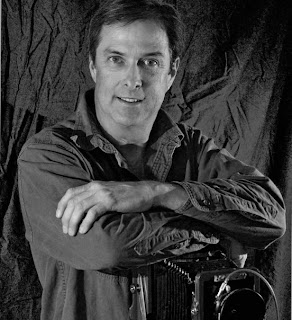


Paul Gill
Photographer


Official website:
http://paulgill.photoshelter.com

Below is the website for the book "Wild in Arizona" by Paul Gill and Colleen Miniuk-Sperry.   I HIGHLY recommend this book.  It is a great resource for everyone, whether you are interested in photography, or if you are a painter looking for amazing spring blooms! Click below:
http://www.wildinarizona.com/index.htm

Facebook:
https://www.facebook.com/paulgillphoto


Below are Paul's responses to my "creativity" questions...

 
1) What personal habits do you have that you feel make you more creative?

Previsualization is the key for me to take elements that I have seen from a location or subject matter and find a story of what it is I want to say about it. I then can create a image in my head making decisions about time of day and light direction to tell the story. Sometimes I will remember past images I have seen and will try and think of a ways to change the image to fit my vision. This is always a driving force to get me to a place where I want to create, funny thing is I almost never find that previsualised image but it do’s influence how and what I see.


2) Who are the creative artists, in any field, that inspire you the most?

I was originally inspired by Maxfield Parish and his great sense of light. My photography is inspired by the Father of near-far David Munch and Tucson's own Pulitzer prize photographer Jack Dykinga both of whom I have had the great honor to photograph with in my earlier years. 


3) What do you do when you are not feeling creative?  Or - how to you get yourself back to a point where you are feeling creative?

To be inspired I try and place myself into beautiful light locations and that triggers the creative spark but that's not always possible so to start creating I will make that first image this helps me get in touch with my surroundings and I will start seeing line shape and light, which leads to finding compositions that I can come back to when the optimal light is on them. If nothing is working I will stop trying to force it to happen then come back latter and take that first step by making an image. 


4) What are some creative outlets that you enjoy outside your own respective creative field? 

Music is always my catalyst with upbeat positive tunes to pump me up before a shoot and relaxing background sounds to slow me down so I can concentrate on what is in front of me giving me the ability to focus on one subject at a time and break down a scene to its most simple components. This helps me block out the world around me.


5) For someone who has talent in a creative field, how would you suggest they go about converting that talent into something original - something that stands out from the crowd?

We all have distinctive visions and directions to move our images but sometimes seeing other artists work can help direct our own originality by filtering out what we do and don't like. I found that the more time I spent with professionals the more I developed my own look and personality to my imagery. And it was only then that I was able to explore and experiment with the talent I have which looks nothing like the photographers that originally inspired me. 
For someone just starting out in the creative field and not sure about their direction I like the book: 

Steal Like an Artist: 10 Things Nobody Told You About Being Creative. Austin Kleon 

I wish this book was out when I was just starting out.


           (This image, "Ponderosa Bloom" is featured in the permanent collection of the Smithsonian)

 http://paulgill.photoshelter.com


 www.neilmyersart.com

Wednesday, March 6, 2013

Creativity Blog # 1, Singer-Songwriter Joanna Smith

Creativity.  It means a lot of different things to different people.  I have begun to realize, the longer I have been an artist, that creativity is really what most interests me - above and beyond the technical capabilities of being able to paint a hand perfectly, or play a scale on guitar, or write a coherent paragraph - or act out those compelling lines.  At some point it occurred to me; since I have been fortunate enough to have some personal contacts with highly creative people in various fields - ie, the arts, music, etc, I thought it might be interesting to write up a set of questions on creativity and ask those same questions to different people.  So we could see the variations in their creative processes and how they view the act of being creative.

This is the first profile in what I hope will be an extended series of blogs on creativity!
 
This week's Q and A is with RCA Nashville recording artist Joanna Smith.  A few years back I stumbled onto several tracks by her on myspace.  I remember the first song I heard by her was a tune called "Let me Kiss You Again" and immediately I was hooked.  It was delicate, sweet, beautiful and crafty - and I found that she had an entire group of wonderful songs.  Perhaps my ultimate compliment to her is this - I am NOT a big country music fan.  I grew up in the south but was always a rock and 'southern rock' kind of guy.  But this girl had me hooked.  I always wanted to hear more.  And sure, she IS country - but she didn't hide behind any of the cliches of country music.  In fact she reinforced the fact that country, as a genre, is very wide and has room for all kinds of artists working under that stylistic umbrella.  She is an original.  When I first heard her I realized that, despite her being young in years, she was a very mature as a songwriter, and a very well polished performer.  And I have to say this too, she is an absolutely lovely person.  That matters a lot.  I met her at a show in Phoenix in 2011 and saw she was a charismatic performer, as well as being a natural with people one on one.  As a true artist herself, she was kind enough to answer my Q and A for our first blog on creativity...


Joanna Smith
Singer-Songwriter


Official website is: http://www.joannasmithofficial.com/us (This link has a direct link to her latest video, which is a must see, called "We Can't Be Friends".  Do check it out!)

Her music is also available on itunes!


1) What personal habits do you have that you feel make you more creative?
Caffeine!!!!  I love to have my morning cup of coffee and dig into a song idea I may have previously written down.  I get my brain going by first writing in my diary.


2) Who are the creative artists, in any field, that inspire you the most?
Springsteen, hands down.  Steinbeck.


3) What do you do when you are not feeling creative?  Or - how to you get yourself back to a point where you are feeling creative?
I hate that feeling!  I stress about it!  I feel like I'll never feel creative again, and surely it's the end of the world.  But then I remind myself.... it always comes back.


4) What are some creative outlets that you enjoy outside your own respective creative field? 
Studying others' creativity.  I love art of all kinds and it inspires me to make my own.


5) For someone who has talent in a creative field, how would you suggest they go about converting that talent into something original - something that stands out from the crowd?
Always, always be you.  Be open to the journey.  You may start by imitating others' work, then have what you do be criticized at which point make necessary changes as you see fit.  Be open to criticism but listen to your gut.  This is the most natural thing,  it takes time and years of experience to be better at it.  "It" being just being yourself.

Links and info:

Check out Joanna's latest release, the EP "Be What it Wants to Be" available on iTunes


Look for Joanna on tour with Maranda Lambert this spring!  Visit http://www.joannasmithofficial.com/us/home


Here is Joanna Smith's latest music video "We Can't be Friends"


www.neilmyersart.com


Sunday, February 10, 2013

Blinkers for an Artist

This week I am working on a new painting of Elephant Head Rock, a large formation in the Santa Rita Mountains just north of Tubac, AZ.  Yesterday I was at Cobalt Fine Arts in Tubac, painting in gallery for the Tubac arts festival.  A gloomy morning with snow on the ground gave way slowly to sunshine and a beautiful, cool day for the festival - which put smiles on the faces of most of the festival goers.

What I wanted to talk a bit about in this blog was something that has come up again and again in conversation with artists and collectors; and that's originality.  Of course the seeking of originality is as old as the arts - and I do not pretend to cover new ground with it, rather only to share a bit more and maybe shed a little light.

For some time Bobby Lee Krajnik and I talked yesterday about originality in the arts, and she mentioned something that I found very interesting.  She said that she had taken some workshops here and there, and heard some curious comments from instructors.  One instructor who saw her work told her that he didn't want to change her style and work that style out of her.  He felt that she had clearly arrived at something distinct, and he didn't want to change it by bending her too much to the instructor's will.  Bobby Lee also relayed that another instructor had told her that frequently artists will take course after course and so many workshops that whatever instinct for personal style they had before gets diluted, and in the course of being affected by the styles of work demonstrated by the instructors - they never really find a personal style. 

I shared with her what I have said to some other trusted people who were interested in how I devised the look of my own works; I told them that I do the reverse of taking courses and critiques and bouncing ideas off other artists.  I put on blinkers and work like a monk.  I try as hard as possible to shut out every other opinion of every other kind of art ever - and I try to answer the question: "How would I paint this scene?"  Bobby Lee and I pretty much agreed that too much input from other artists allow them into your head, and at some point, if you don't clarify where your influences are coming from, you yourself are not painting - you and some other people are painting.

Of course, we all have our influences.  When I look at other artist's work, I look primarily at Van Gogh and my friend Jean-Claude Quilici.  I too glean something from those who came before me.  I have found that other artists are wonderful in helping you learn the materiels needed to get certain effects, and with some of the kind of shop talk tips that are useful in the arts.  But as regards to style, I still think that is a personal search - instruction can teach you a certain skill set.  Style is a product of self reflection.  It is not easy...

So my suggestion, if anyone might bother to ask - is that if you are one who likes to take courses, keep them in perspective in as much as they can increase your skill set and perhaps give you personal time with an excellent artist.  But I would also suggest that you construct a kind of art that has a style that is built on your own self reflections - and visions that do not belong to anybody else.

So yes, spend some time shading and learning how to paint that eye, or head, or tree - but spend a little time dreaming.  Spend some time, and a little paint and canvas, on that vision that is only yours.  That thing only you can create - and only your neglect can supress. 

www.neilmyersart.com

http://bobbyleekrajnik.blogspot.com/

Tuesday, January 15, 2013

Saguaros of the Sonoran Desert, New Show Opening January 24

This week I am not as much in the studio as I am labeling, arranging, varnishing - etc, new works that will be featured in my upcoming show at the Marshall-LeKAE Gallery in Scottsdale, AZ.  The new show is called Saguaros of the Sonoran Desert and it opens on January 24th.  If you are in Scottsdale, please do drop by.  I will be there and would love to meet anyone coming out - whether you love Saguaros or just love art...

For me, Saguaros feel to me a bit like it must feel for those musicians who play greatest hits for the fans.  Since I moved to Arizona, now nearly ten years ago, I have been captivated by these large desert dwellers.  I have told friends that they seem to me to be one of the only plants that are almost anthropomorphic - I have always had the feeling that when I was around them, I was not alone.  And I don't have a mystical bone in my body.  The towering presence of these beautiful cacti have impressed on me something that could not help but come out in my paintings of this region.  Once I remember a gallery director telling me that many artists paint saguaros "almost as if they have never even taken a look at them".  He told me that I always captured something about their own individual uniqueness.  (Picture those old Roadrunner and Coyote cartoons, and the saguaro by the road, two arms bent upwards.  Typical!)  It was quite a compliment.  I went on to tell him that when I go out on a trail to take photos that I will later paint from - I always look for either single saguaros or groups of them that are unusual, or which strike my eye as a kind of curiosity.  I don't look for the typical ones.  Of course they do exist, but I have always preferred those that showed true originality of shape and natural design.

So this show is my tribute to those "Giants of the Desert" - those amazing and beautiful icons of natural Arizona.  I have never tired of looking at them, nor have I ever tired of painting them.  They have been created by the small progress of decades or even hundreds of years.  To capture them with brush and canvas seems just as natural to me as those rocky hillsides they inhabit. 

www.neilmyersart.com

Thursday, October 18, 2012

Paris is for (Art) Lovers

This week I am gearing down a bit and retouching some works finished earlier in the year.  Most of the paintings for my January show at the Marshall-LeKAE Gallery are finished, and new paintings have just recently been delivered to Cobalt Fine Arts in Tubac.

However I did want to write a few lines about our recent trip to England and France.  Last month my wife and I decided to take the opportunity to visit England, where my wife's brother is currently living and working, and use that as a chance to see as much of London as possible - as well as to pay a quick visit Paris for a few days.

When it comes to art, I am a little firm in believing that you haven't even begun to get a taste for the greatest art out there, until you have been to Europe.  So much of the legacy of the greatest art ever made can be found in France, England, Italy, Germany, Spain, and countless other locations on the continent.  As a student in Aix-en Provence, France in 1996 I was fortunate enough to be able to both see many of the works of the great Impressionist masters that I so adored, and to also see many of the places they painted.  As my friend, the artist Jean-Claude Quilici remarked in an interview - many of the places where the greatest artists painted have hardly changed.  Many of the villages, for example, in southern France, where Van Gogh, Cezanne, and others worked - many of them have been altered very little with the passage of time.  So it presents the unique opportunity for an artist to both look at the best European works, and see the places where they are made.

Foremost in my mind, always, is Paris.  Paris has been a nexus for world art for a very long time.  It was the mecca of the Impressionist movement.  And though many artists didn't live in Paris itself, the city was a source of both inspiration and exhibition opportunities, and was ringed with towns and villages that artists called home.

For me, coming back to Paris in 2012 was especially sweet.  In 1996 I visited the city twice, pretty much taking the opportunity to see as many galleries and museums as possible.  And also to meet up with my friend Jean-Claude Quilici.  I was 20 years old then, a boy from small town North Carolina.  Now I am 37, with a wife and son and another son on the way - and with an art career I could scarcely have imagined during those days when I haunted the Louvre and Musee d'Orsay back in 1996.  I was pleased to find, on a personal note, that it was not as hard as I thought it was to speak French as well as I did back then.  I remembered probably 88% of what I knew while I was living there, and got many compliments on how well I spoke.  I probably shock people there because the feeling you get from the French is that they don't expect ANY American to speak French.  It's always a pleasant surprise for them.

However during three days in Paris and the remainder of our days in London, I was reminded very directly why the act of pilgrimage isn't just a religious act - artists too, I think, must show a certain devotion to knowing their roots, and wherever possible, must go to the places where great works are, and where they were inspired.  Though I am a self-taught artist, I have always thought that it is very important that you learn from the best.  So rather than worry about some somebody who is a passing fad - I have always told myself, if you are going to be a painter, go learn from Monet, Manet, Renoir, Sisley, Pissarro, Van Gogh, Quilici, Gary Ernest Smith, Vlaminck, Derain, Cassatt, and many others.  Start at the top and try to tap into the best.

At one point during this trip my wife and I went to take our 3 year old son to the restroom at the Musee d'Orsay, and in order to get back to the place where you can start your visit, you had to pass through the rooms that were stacked wall to wall with all the great masters of Impressionism.  We walked right up to Manet's "Luncheon on the Grass" and I told my wife "If you can catch a glance, look around you.  You are looking at the best of the best."

London also was not to be missed, and there were indeed some wonderful artistic gems to be found there.  We visited the National Gallery, which also had an exceptional display of impressionist work - and I caught glances of other amazing works during our hurried visit there.  One of Van Gogh's original "Sunflowers" is there, and when we walked in the door I was carrying our 3 year old son Liam - and Liam pointed to Van Gogh's Sunflowers and said "That painting looks like one of your paintings da da!" (He calls me 'da da' instead of dad)  I've gotten some nice compliments on my work through the years; this one might have been one of the best.

Another gem which is a little off the beaten path is the Courtauld Gallery.  This gallery touts itself as one of the finest small art museums in the world, and I think that title is WELL earned.  You will find such masterworks there at Manet's "Bar at the Folie Bergere", which was the last large Manet completed at the end of his life.  Van Gogh's self portrait with a bandaged ear was there also - which was very touching.  I told my wife that it was quite something than Vincent wanted to document even one of the worst moments...the self-inflicted mutilation of his ear.  He was so unsparing in his artistic view - even of himself.  It made me think of Monet painting his wife Camille on her deathbed.

So yes, if you believe in doing great work, or that you want to attempt to - you have to see the masters of Europe.  If you have to, see them at the best big-city gallery you can make it to, even in your own country.  (Here in the states, galleries like the National Gallery in Washington DC, the Art Institute of Chicago, and the Met in New York come to mind)  But if you can see those great works, and get the added uplift of walking those same cobblestone streets and enjoying making those footprints - your work and your life will ever be the wiser for it.  Mine sure is....

www.neilmyersart.com

Tuesday, August 7, 2012

In Remembrance of Artist Paul Sheldon

It was with great sadness that I was told a few days ago of the passing of the artist Paul Sheldon.  Mesia Hachadorian, the director of Cobalt Gallery, called me this past Friday and informed me that Paul had died very suddenly the previous Wednesday.  We both shared the shock and sadness of the moment - that horrible and huge feeling you get when your mind has to try to process your world going forward - without one of your friends in it.

I thought back and I could not remember specifically when I had met Paul.  I ran into him coming and going from the Max Gallery when he and I were both represented there.  I got to know him a bit better when he came on board at another gallery where I also showed work, Cobalt Fine Arts in Tubac.  Paul and Cobalt Gallery did very well together, and it was there that I ran into him regularly, during demonstrations and other occasions.  At some point I began to kid him by saying "Well Paul, we should at least be friends because when we both kick over they'll say that we were two of the best Arizona colorist painters!"  It was all a joke at the time - I could not have imagined that I would now be writing a blog and he would no longer be with us.

As artists Paul and I shared one thing that was unmistakable - a great love of color and a curiosity to see what extreme color statements could do in the confines of a painting.  I don't know if Paul would have identified with Fauvists, as I have, because I never actually heard him talk of painting movements or where he thought he fell in the greater scheme of things.  I actually almost appreciated that because many of us who have found our style that we love and are known for - many of us don't spend that much effort worrying about how we will be remembered on exactly where we fit.  We just do our work and go at it with the sense that it doesn't require that much talking about.  Paul seemed very much that way.  He just painted and didn't expound.  Sure he did demonstrations of his work, as we all do - but he was never preachy or self-consumed.  It was more like a sort of 'have a look if you want' mentality that I very much respect.

I last saw Paul a few months ago when we got together to play music.  He played the hammer dulcimer.  He dropped by our house, set up his instrument in our son's play area and he and I ran thought a series of tunes matching my 12 string guitar to his dulcimer.  After a lot of fooling around we decided that "Tequila Sunrise" by the Eagles and "Too Sober to Sleep" by Justin Rutledge were the best songs for the two instruments, and we practiced them a few times.  Paul had a great natural ear for music.

At about that moment I was on my way to look for a gallery in Santa Fe around that time, and we talked a few times on the phone quite extensively about ideas for showing work - and he and I even discussed a possible trip through Colorado to look for galleries.  Paul had just gotten himself a fine new truck and was eager to make a big trip of it.  It stands in my mind now that we all have that in our lives.  Those plans we want to get to but never come to fruition.  The lesson - if you have a mind to do something, do it before anything else gets in the way.  You may not have tomorrow to take a road trip with a friend and see the mountains of Colorado.

There is one great consolation when we think about the life of an artist who has left us - the work.  The work will remain as long as people care to preserve it.  So many lives come and go on this earth, people spend their time and they are gone with little more evidence than the gravestone.  Artists have a buffer against their mortality in their work; and so we can look again, maybe even with new eyes, and be thankful for the beautiful colors and glowing images that an artist leaves us.  He put himself into those works, so he will, by default, remain with us.

Paul, if I could speak to you I would say thank you for your friendship and thank you for the work that you have left us to enjoy for many years to come.  I was very glad to know you - and if it happens that there is something on the other side for us when this life is over, I hope it's full of neon-cowboys, Arizona sunsets, and old Western Movies.

Thank you Paul.

http://www.psheldon.com/


Wednesday, July 11, 2012

Saguaros - and NO I Don't Get Tired of Painting Them!

Hello everyone - sorry I've been a little absent.  I tend not to blog like a madman.  I prefer to write something when I actually have something to say, rather than all to the reams of drivel and blabber floating around out there on the internet. 

This week I am working on a new 30 x 40 of Saguaros on a hillside of blooming brittle-brush.  This painting, and a legion of others that are sitting and drying in the studio gave me the idea for this blog post - some thoughts about one of our great Arizona icons, the Saguaro cactus. 

Since we are planning a saguaros show of my paintings at the Marshall-LeKAE Gallery in Scottsdale for March of 2013, I thought it might be nice to reflect a little on the giant cactus that has been so much the centerpiece of countless paintings by me - and other Arizona artists. 

I remember once talking to Max Mikesell, who formerly ran the Max Gallery in Tucson some years back, and I remember Max saying that it seemed to him that some artists who paint saguaros hadn't even looked at them.  Almost as if they had some general idea of what a saguaro should look like; two upturned arms, very "roadrunner and coyote" kind of landscape stereotype.  And he mentioned that even though my saguaro themed works weren't strictly realistic, they still showed evidence that I had taken some time to look at them...and indeed I have.

What is most important if you are an artist painting Saguaros is the realization that they provide on of the most prominent verticals in a landscape dominated by big skies, small, round trees, and huge horizons.  Saguaros cast your eyes up to the vertical, and thus balance a landscape much the way that a pine tree might well do back east in the woods.  But the cool thing about saguaros is their amazing shapes and individual character.  I've told people that they might well be one of the few plants that I think actually have personality.  You see them swell with the summer rains.  You see them hold up and hold firm when monsoon storms rip through the area.  And you see them lord over the landscape like giants - standing tall and proud even in the hottest, most brutal parts of Arizona summer.  I have called some among the series of saguaro paintings that I've done "Giants of the Desert", and it seems to me that they are indeed giants who stand over us in the fiery heat of our surroundings.  When you come to know them and the fact that they grow so slowly that they are frequently 50 to 75 years old before they even sprout a single arm - you then realize that in mature saguaro forests, you may be looking at 150 or 200 year old plants.  Plants whose duration dwarfs the lifetime of humans.  I remember a biologist saying that was one of the problems of long term saguaro studies; that it is hard to study them in a sustained way because that might take three generations of scientists.  Imagine...

(I'll note for the record also that people still get a laugh at me because I have the habit of saying "Sa-Guaros" with a hard "G".  Whereas most of the locals say "sah-wa-ros".  Oh well, I didn't grow up here, and some habits die hard.)

For me, I guess it's fair to say that I've set myself up and studied them as intently as Monet did Rouen Cathedral, or his poplars.  I have never gotten tired of looking at them, and always been keen to understand the unique personality of the plants as I studied them.

I love the world in all it's landscapes and variety.  But there will always be a soft spot in my heart for these wonderful "Giants of the Desert."

www.neilmyersart.com